
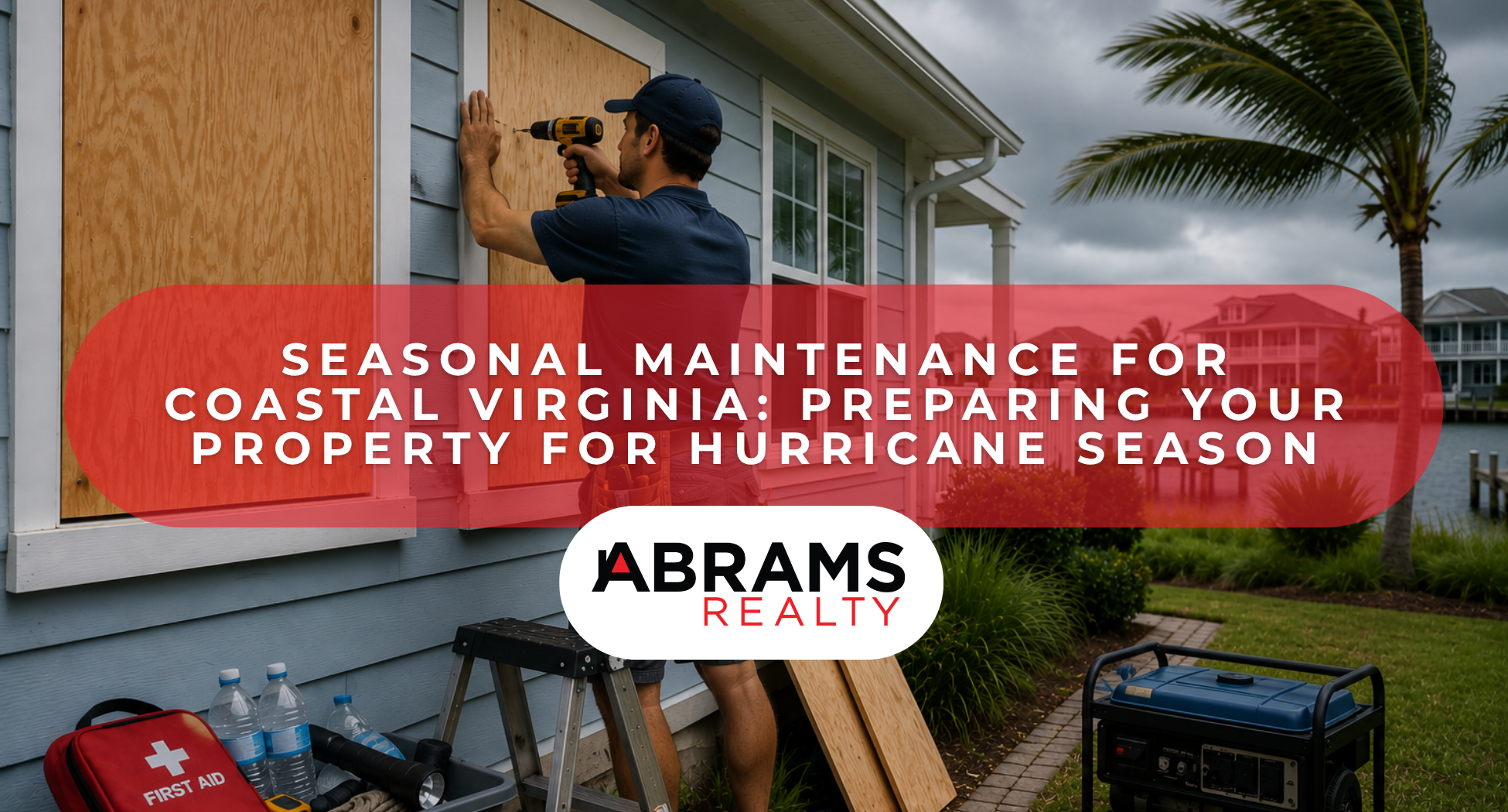
Owning rental property in Virginia Beach comes with incredible advantages, from strong demand to beautiful coastal surroundings. However, living near the coast also means preparing for hurricane season every year. High winds, heavy rainfall, flooding, and salt air corrosion can quickly turn small maintenance issues into major repairs.
For rental property owners, proactive seasonal maintenance is one of the most important steps you can take to protect your investment and avoid extended vacancies.
Key Takeaways
Hurricane season in Virginia Beach requires proactive rental property maintenance.
Coastal homes face unique risks, including wind damage, flooding, and salt air corrosion.
Preventative inspections reduce costly emergency repairs and tenant disruptions.
Clear tenant communication before and after storms protects both owners and residents.
Professional property management ensures your home is prepared and monitored throughout the season.
Understanding Hurricane Risks in Virginia Beach
Virginia Beach’s coastal location makes it especially vulnerable during hurricane season, which typically runs from June through November. Even tropical storms can cause significant damage to unprepared rental homes.
Wind Damage and Roofing Vulnerabilities
Strong winds are often the most destructive part of a hurricane. Loose shingles, damaged flashing, and clogged gutters can quickly lead to water intrusion. Once water enters the home, it can damage ceilings, insulation, drywall, and flooring.
Routine roof inspections before hurricane season help identify weak spots early. Replacing missing shingles and securing flashing may seem minor, but those small fixes can prevent major insurance claims later.
Flooding and Drainage Concerns
Flooding is a serious concern in many parts of Virginia Beach, especially in low-lying and designated flood zones. Poor grading, blocked drainage systems, and malfunctioning sump pumps increase the likelihood of water intrusion.
Landlords should:
Ensure gutters and downspouts direct water away from the foundation
Check that grading slopes away from the property
Inspect crawl spaces and basements for moisture issues
Verify sump pumps are operational where applicable
Addressing drainage issues before heavy rainfall begins can significantly reduce the risk of structural damage.
Salt Air Corrosion and Exterior Wear
Coastal properties face an additional challenge that inland homes do not: salt air. Over time, salt accelerates corrosion of HVAC components, exterior light fixtures, metal railings, and fasteners on decks and fences.
Seasonal inspections of exterior hardware and mechanical systems can extend their lifespan and reduce unexpected breakdowns during peak rental season.
Pre-Hurricane Season Maintenance Checklist for Landlords
Preparing early is far more cost-effective than reacting after a storm. A structured maintenance checklist ensures nothing critical is overlooked.
Inspect and Reinforce the Roof
Schedule a professional roof inspection before hurricane season begins. Address:
Missing or loose shingles
Damaged flashing around vents and chimneys
Clogged or sagging gutters
If your property has an older roof, this is especially important. Minor repairs now can prevent interior water damage later.
Check Windows and Doors
Windows and doors are common entry points for wind-driven rain. Inspect:
Weather stripping for wear
Caulking around frames
Door seals and thresholds
In higher-risk areas, impact-resistant glass or storm shutters may be worth considering for long-term protection.
Service HVAC Systems
Outdoor HVAC units are exposed to debris and flood risks. Ensure units are:
Securely anchored
Elevated appropriately in flood-prone areas
Serviced and cleaned before peak storm months
A properly maintained system is less likely to fail during extreme weather.
Trim Trees and Secure Outdoor Features
Overhanging branches can break and damage roofing or siding. Before hurricane season:
Trim weak or overextended limbs
Remove dead trees
Secure fencing and gate hardware
Provide tenants with guidance on securing patio furniture and grills
Clear communication with tenants about their responsibilities for outdoor items can reduce preventable damage.
Protecting Your Rental Property Legally and Financially
Physical preparation is only part of hurricane readiness. Landlords should also protect themselves from legal and financial risk.
Review Insurance Coverage
Standard landlord insurance policies may not include flood coverage. In coastal Virginia Beach neighborhoods, separate flood insurance policies are often necessary.
Review your policy limits, deductibles, and exclusions before hurricane season begins. Confirm that loss of rental income coverage is adequate in the event of significant damage.
Document Property Condition
Maintain updated photos and documentation of the property’s condition prior to hurricane season. This documentation can be invaluable if insurance claims arise or disputes occur regarding pre-existing damage.
Communicate Emergency Procedures to Tenants
Tenants should clearly understand:
Evacuation recommendations and local emergency alerts
How to report storm damage
What constitutes an emergency maintenance request
Providing written instructions ahead of time reduces confusion during high-stress situations.
Why Professional Property Management Makes Hurricane Season Easier
Preparing for hurricane season takes time, coordination, and consistent follow-through. For many landlords, managing inspections, vendors, insurance documentation, and tenant communication can quickly become overwhelming.
At Abrams Realty, we work with Virginia Beach property owners to implement proactive seasonal maintenance plans tailored to coastal rentals. We coordinate inspections, schedule preventative services, communicate directly with tenants, and respond quickly if storm damage occurs.
Our local experience in Virginia Beach means we understand flood zones, neighborhood-specific risks, and the unique maintenance challenges coastal properties face. Instead of reacting after a storm hits, we help owners prepare in advance and protect long-term rental performance.
Frequently Asked Questions about Preparing Rental Properties for Hurricane Season
What should landlords do first before hurricane season begins?
Start with a professional roof and drainage inspection to identify vulnerabilities before severe weather arrives.
Are landlords responsible for storm damage repairs?
In most cases, structural repairs fall under the landlord's responsibility, though insurance coverage details vary by policy.
Should tenants carry renters insurance in hurricane-prone areas?
Yes, renters' insurance protects tenants’ personal belongings and can reduce liability disputes after a storm.
Is flood insurance necessary in Virginia Beach?
Many coastal properties require separate flood insurance policies beyond standard landlord coverage, particularly in designated flood zones.
Stay Storm-Ready and Protect Your Virginia Beach Rental Investment
Hurricane season is an unavoidable reality of owning property in Virginia Beach. The difference between a minor inconvenience and a major financial setback often comes down to preparation. By investing in seasonal inspections, preventative maintenance, and clear tenant communication, you can significantly reduce risk and protect your rental income.
If you want to ensure your coastal rental is fully prepared before the next storm system develops, we can help. At Abrams Realty, we provide proactive property management services designed specifically for Virginia Beach landlords. Let us handle inspections, maintenance coordination, and tenant communication so you can feel confident your investment is protected all season long.
Additional Resources
Landlord Rescue Services in Virginia Beach: What They Mean and Why Property Owners Hire Us
How to Handle Neighbor Complaints About Your Virginia Beach Rental Property
The Ultimate 2026 Checklist for First-Time Renters in Virginia