
Key Takeaways
The highest possible monthly rent does not always produce the highest return. Landlords should balance rent, vacancy, turnover, operating expenses, and tenant retention.
Hampton Roads continues to show strong rental demand in 2026. Virginia REALTORS® reported that the region had the highest multifamily net absorption among Virginia metro areas in the third quarter of 2026, while average effective rents increased 5.7% year over year.
Rental pricing should be based on genuinely comparable properties, including location, property type, bedrooms, bathrooms, square footage, condition, amenities, parking, and lease terms.
Vacancy is a major factor in rental ROI. A property priced slightly below an overly aggressive asking price may generate more annual income if it leases faster.
Virginia landlords should review current requirements for rental agreements, rent increases, fees, security deposits, and fair housing before implementing a pricing strategy.
Pricing a rental property correctly is one of the most important decisions a landlord or real estate investor makes. Set the rent too low and the property may produce less income than the market supports. Set it too high and the rental could remain vacant, leaving the owner responsible for mortgage payments, taxes, insurance, utilities, maintenance, and other expenses without rental income.
Finding the right price is especially important in Hampton Roads. Rental conditions vary throughout Virginia Beach, Norfolk, Chesapeake, Portsmouth, Suffolk, Hampton, and Newport News. Even within the same city, two properties with the same number of bedrooms may command different rents because of location, condition, parking, renovations, property type, amenities, and competing inventory.
For landlords and investors in 2026, the better question is not simply, "What is the highest rent I can charge?" Instead, ask, "What rental price gives this property the strongest overall return while keeping vacancy and operating costs under control?"
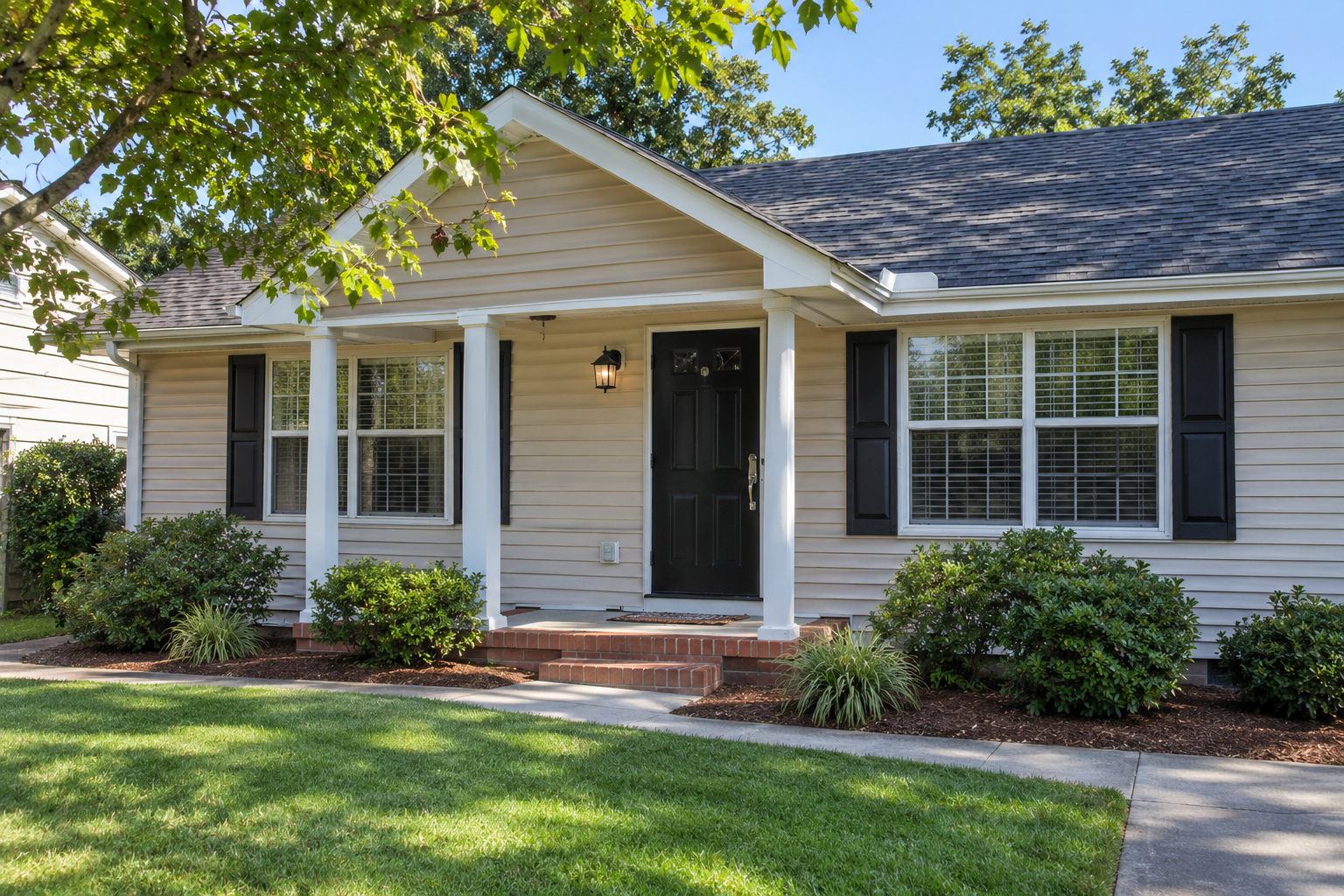
Understand the Hampton Roads Rental Market in 2026
Hampton Roads entered the later part of 2026 with notable rental-market momentum. According to Virginia REALTORS®' third-quarter 2026 multifamily market analysis, Hampton Roads recorded 932 units of positive multifamily net absorption during the third quarter, the highest among Virginia metro areas. Net absorption measures the difference between units leased and units vacated, making it a useful indicator of rental demand. The same report found that average effective rents in Hampton Roads increased 5.7% year over year, the strongest rental-price increase among the Virginia metro areas included in the analysis.
Earlier in 2026, Virginia REALTORS® reported on first-quarter rent trends across Virginia. Hampton Roads had the sharpest year-over-year rent increase among the markets analyzed at that point, rising 4.1%, with the average multifamily rent reaching $1,536 per unit. These statistics indicate healthy regional demand, but they should not be interpreted as permission to automatically raise every rental by the same percentage. Regional averages provide context. The value of an individual property still depends on its specific competition.
A renovated three-bedroom house with a garage and fenced yard may support a different rent than an older three-bedroom property nearby. Likewise, apartment averages may not accurately represent the market for a detached single-family rental.
Start With a Rental Comparative Market Analysis
One of the best ways to establish market rent is to study properties that prospective tenants are actually likely to consider as alternatives.
Compare Similar Property Types
Start by comparing like with like. A single-family house should primarily be evaluated against other single-family rentals. A townhouse should be compared with similar townhouses. Condominiums should generally be evaluated against comparable condominiums. Broad citywide apartment averages can provide market context, but they may not accurately reflect the value of an individual investment property.
A family searching for a four-bedroom Chesapeake house with a garage, for example, may not view a two-bedroom Norfolk apartment as a practical alternative even though both are part of the Hampton Roads rental market.
Compare the Features That Matter
Strong rental comparables should be similar in:
Neighborhood and location
Property type
Number of bedrooms
Number of bathrooms
Interior square footage
Property condition
Renovation level
Parking availability
Garage availability
Outdoor space
Appliances included
Utilities included
Community amenities
Pet policies
Lease duration
The closer the comparable property is to the subject rental, the more useful its asking price becomes.
Use Multiple Comparables
Do not determine rent from one competing listing. One landlord may be testing an overly ambitious price. Another may intentionally price below market because immediate occupancy is more important. Study several listings to establish a reasonable range. Also pay attention to how long those properties remain available. A home advertised at $2,600 per month for six weeks does not necessarily prove that $2,600 is achievable market rent.

Understand Asking Rent Versus Achievable Rent
Advertised rent and achievable market rent are not always the same. An asking rent represents the amount a landlord hopes to receive. Market rent is closer to the amount qualified tenants are actually willing to pay under current conditions. Suppose several comparable homes are listed between $2,300 and $2,500 per month. If homes priced around $2,350 consistently receive applications while the $2,500 listings remain available, the market may be indicating that the more realistic range is closer to the lower number.
Watch for:
How long comparable properties remain available
Rental price reductions
Changes in competing inventory
New rentals entering the market
Properties disappearing quickly from the market
Concessions or incentives being offered
Rental pricing should respond to what tenants are actually doing, not simply what other landlords are asking.
Calculate the Real Cost of Vacancy
Vacancy can significantly reduce rental ROI. Consider a simplified example. A property could reasonably rent for $2,400 per month and is expected to lease quickly. The landlord instead decides to advertise it at $2,550.
If the property rents for $2,400 and remains occupied for 12 months:
$2,400 × 12 = $28,800 in gross annual rent
If asking $2,550 causes the property to remain vacant for one additional month:
$2,550 × 11 = $28,050 in collected rent
Despite charging $150 more during occupied months, the owner collects $750 less during the year. That does not include additional costs that may arise during vacancy, such as utilities, landscaping, cleaning, security, maintenance, advertising, or property management expenses. This is why maximizing monthly rent and maximizing rental ROI are not necessarily the same thing.
Calculate Effective Monthly Rent
Another helpful calculation is:
Annual Rent Collected ÷ 12 = Effective Monthly Rent
If a landlord collects $27,600 during the year:
$27,600 ÷ 12 = $2,300 effective monthly rent
Using effective rent allows investors to compare different pricing and vacancy scenarios more accurately.
Measure Net Income Instead of Gross Rent Alone
A rental property's performance should not be judged solely by the monthly rent. A simplified net operating income calculation is:
Gross Rental Income
− Vacancy Loss
− Operating Expenses
= Net Operating Income
Operating expenses may include:
Property taxes
Landlord insurance
Property management
Routine repairs
Preventive maintenance
HOA or condominium fees
Landscaping
Pest control
Owner-paid utilities
Turnover costs
Leasing and marketing costs
Replacement reserves
Mortgage principal and interest are typically analyzed separately from property-level net operating income, although financing expenses obviously affect the investor's actual cash flow.
Consider Cash-on-Cash Return
Investors can also evaluate:
Annual Pre-Tax Cash Flow ÷ Total Cash Invested × 100
For example, an investor with $90,000 invested in a property that produces $7,200 in annual pre-tax cash flow would have:
$7,200 ÷ $90,000 × 100 = 8% cash-on-cash return
The key principle is simple. Raising the rent only improves ROI when the additional income exceeds any additional vacancy, turnover, maintenance, or leasing expenses caused by the pricing decision.

Price for the Specific Hampton Roads Submarket
Hampton Roads should not be treated as one uniform rental market. Current rental data illustrates the differences between local markets. For example, Realtor.com's 2026 Virginia housing and rental market data shows meaningful differences among rental prices and inventory across Virginia cities.
Virginia Beach
As of September 2026, Realtor.com's Virginia Beach market data reported a citywide median asking rent of approximately $2,300 per month. However, neighborhood figures varied. Rental pricing in areas such as Kempsville, Bayside, Great Neck, the Oceanfront, Bayfront, and Courthouse-Sandbridge can differ substantially. This demonstrates why citywide averages should serve as reference points rather than automatic pricing recommendations.
Norfolk
Norfolk has a different rental profile. Realtor.com's Norfolk market data reported a median asking rent of approximately $1,850 per month in September 2026. Norfolk also contains a significant renter population. U.S. Census Bureau QuickFacts for Norfolk reports an owner-occupied housing rate of 46.3% for 2020 through 2024. Within Norfolk, pricing can still vary substantially depending on property type, neighborhood, condition, parking, access to employment centers, and other property-specific factors.
Chesapeake
Chesapeake illustrates why investors should avoid applying one Hampton Roads rental average across every property. Realtor.com's Chesapeake market data reported a median asking rent of approximately $2,550 per month in September 2026. Neighborhood-level rental figures also varied significantly across areas such as Western Branch, Great Bridge, Greenbrier, Deep Creek, South Norfolk, and Indian River.
Landlords should apply the same neighborhood-level analysis in Portsmouth, Suffolk, Hampton, and Newport News.
Account for Property Features That Influence Rent
Not every improvement increases rental value equally. Features that may strengthen a property's competitive position include:
Updated kitchens and bathrooms
Newer HVAC systems
Durable flooring
Energy-efficient improvements
In-unit washer and dryer
Garage or off-street parking
Functional outdoor areas
Additional storage
Updated appliances
Clean, neutral interior finishes
Well-maintained landscaping
Before renovating specifically to increase rent, compare the cost of the project with the additional income it may generate. For example, spending $15,000 purely to obtain an additional $50 per month in rent would generate only $600 in additional gross rental income annually. The improvement may still increase property value, reduce maintenance, or improve tenant retention, but the rent increase alone may not justify the expense.
Investors should prioritize improvements that solve clear tenant concerns, reduce operating expenses, or meaningfully improve the property's competitive position.
Consider Lease Timing and Seasonal Demand
Rental demand changes throughout the year. Hampton Roads experiences household movement related to employment changes, military relocations, educational schedules, and normal lease transitions. A property becoming available during a period with stronger rental activity may perform differently from the same property entering the market during a slower period. Landlords can consider future lease expiration dates when approving leases and renewals. When practical, positioning future vacancies during periods with stronger leasing activity can help reduce vacancy risk.
Seasonality alone, however, should never determine rent. Current competing inventory and tenant demand should still be reviewed before establishing the asking price.
Factor Tenant Retention Into ROI
Keeping a reliable tenant can have significant financial value. When a tenant leaves, the owner may face:
Vacancy
Cleaning
Painting
Repairs
Landscaping
Utility expenses
Advertising costs
Showing expenses
Administrative work
Leasing or management costs
Suppose a reliable tenant currently pays $2,200 per month and current comparable rentals indicate a market rate of approximately $2,300. Raising rent by $100 could produce up to $1,200 in additional annual income if the tenant remains.
However, if the increase results in a move-out, several weeks of vacancy and $1,500 in turnover expenses could erase the additional income. This does not mean landlords should avoid appropriate rent increases. Instead, renewal pricing should account for the financial value of an existing tenancy as well as current market rent.
Monitor the Listing After It Goes Live
Once a property is marketed, the response from prospective tenants provides valuable information.
Strong Interest
Numerous inquiries, showing requests, and qualified applications may indicate that the property is positioned competitively.
Online Views but Few Inquiries
The listing may have a pricing, presentation, or property-condition issue.
Showings but No Applications
Prospective tenants may be comparing the property with alternatives and deciding they can obtain better value elsewhere.
Little Activity
The property may be priced above the current market, especially when comparable rentals are receiving stronger interest. Landlords should avoid allowing an ambitious asking price to create unnecessary vacancy. A strategic adjustment made early can sometimes produce a better annual return than waiting several additional weeks for the original price.

Follow Current Virginia Rental Requirements
Rental pricing decisions must also fit within Virginia's landlord-tenant laws. The Virginia Department of Housing and Community Development's Tenant and Landlord Resources provides the current Statement of Tenant Rights and Responsibilities and other resources relating to the Virginia Residential Landlord and Tenant Act.
Rent and Rental Agreements
Virginia law addresses rental-agreement terms, rent payments, lease copies, notices, and other requirements through Virginia Code § 55.1-1204. One important 2026 provision applies to landlords who own more than four rental dwelling units, or more than a 10% interest in more than four rental dwelling units, in Virginia. When an eligible tenant has the option to renew a rental agreement or the agreement contains an automatic-renewal provision, the landlord must provide written notice of a rent increase at least 90 days before the end of the rental agreement term. The statute contains additional requirements regarding the tenant's renewal-response deadline.
Landlords should review the complete statute to determine whether a particular tenancy is covered.
Fee Disclosures
Under Virginia Code § 55.1-1204.1, written rental agreements must begin with an itemization that includes the security deposit, rent due per payment period, and applicable additional one-time charges due before the tenancy begins or included in the first rental payment. Clear fee disclosure helps landlords and tenants understand the actual financial terms of the lease.
Security Deposits
Virginia Code § 55.1-1226 generally prohibits a landlord from demanding or receiving a residential security deposit exceeding two months' periodic rent. The same section contains detailed requirements concerning deductions, records, move-out inspections, and return of deposits. Because Virginia rental law can change, landlords should confirm current requirements before changing lease forms, rent, fees, deposits, or renewal procedures.
Use Consistent and Fair Housing-Compliant Pricing Practices
Rental pricing should be based on legitimate business and property considerations. Landlords can base pricing decisions on factors such as:
Comparable rental values
Property size and characteristics
Condition
Included services or utilities
Lease duration
Furnishings
Current market demand
Property improvements
Pricing, concessions, lease terms, or availability should not be determined based on protected characteristics. The Virginia Department of Housing and Community Development directs housing discrimination concerns to the Virginia Fair Housing Office. Creating written rental criteria and consistently applying established policies can help landlords make pricing and leasing decisions based on objective business factors.
Review Rental Pricing Regularly
A rental property's price should not remain unchanged simply because that was the amount charged several years ago. Review pricing:
Before advertising a vacancy
Before offering a lease renewal
After significant improvements
When competing inventory changes
When operating costs change substantially
During an annual investment-performance review
A market review does not automatically mean the rent should increase. Sometimes retaining a reliable tenant at the existing rent may produce better overall returns. At other times, comparable properties and operating expenses may clearly support an adjustment. The goal is to make the decision intentionally rather than automatically.
Use a Rental Pricing Checklist
Before setting the asking rent for a Hampton Roads property, answer these questions:
What are the closest comparable rentals asking?
Which competing properties appear to be leasing quickly?
How long have similar listings remained available?
What features make this property better or worse than the competition?
What would one week or one month of vacancy cost?
What are the property's annual operating expenses?
What rent is necessary to achieve the investor's target return?
What lease duration makes sense for the expected market?
Are rent, deposits, charges, and lease terms compliant with current Virginia requirements?
How quickly will the asking price be reevaluated if the market response is weak?
This approach turns rental pricing from guesswork into an investment decision.

Why Local Rental Market Knowledge Matters
Automated rental estimates can be useful starting points, but individual properties are difficult to value using algorithms alone. A local property management professional can consider factors that online estimates may not fully capture, including current neighborhood competition, recent showing activity, applicant behavior, property condition, lease timing, local inventory, and features that matter to Hampton Roads renters.
For investors with multiple properties, consistent rental analyses can also improve portfolio-level decision making. Instead of evaluating each property only when a tenant moves out, investors can regularly compare rent, vacancy, maintenance costs, turnover, cash flow, and local market conditions across the entire portfolio.
Final Takeaway
Pricing a rental for maximum ROI in Hampton Roads in 2026 requires more than selecting the highest rent the market might tolerate. A strong strategy balances market rent, vacancy risk, tenant retention, operating expenses, property condition, competition, lease timing, and long-term investment goals.
Hampton Roads continues to demonstrate healthy rental demand, but conditions differ among Virginia Beach, Norfolk, Chesapeake, Portsmouth, Suffolk, Hampton, Newport News, and individual neighborhoods within those cities.
Start with accurate comparable rentals. Calculate the financial impact of vacancy. Measure performance using net income rather than monthly rent alone. Consider the value of tenant retention. Monitor market response once the property is advertised, and adjust the strategy when the evidence supports doing so.
For landlords and investors, the most profitable rent is often not the highest advertised rent. It is the price that attracts qualified tenants within a reasonable period, supports strong occupancy, controls turnover costs, covers operating expenses, and produces dependable long-term returns from the property.