
Key Takeaways
Coastal Virginia offers several distinct rental investment markets, ranging from higher-priced Virginia Beach and Chesapeake properties to more accessible opportunities in Portsmouth, Hampton, and Newport News.
Norfolk offers one of the region's most diverse rental-demand bases, supported by military activity, higher education, healthcare, maritime industries, and a large existing renter market.
Chesapeake and Suffolk may appeal to investors focused on single-family rentals, while lower acquisition prices in Portsmouth, Hampton, and Newport News can create different opportunities for investors prioritizing affordability.
Flood exposure, insurance, property condition, maintenance, and neighborhood-level rental demand can significantly change the profitability of a Coastal Virginia investment.
There is no single best city for every investor. The strongest rental property is one where purchase price, realistic rent, operating expenses, financing, condition, location, and long-term strategy work together.
Coastal Virginia continues to deserve attention from rental property investors in 2026. Hampton Roads combines military installations, shipbuilding, maritime activity, universities, healthcare systems, tourism, logistics, government employment, and private-sector businesses within one interconnected region. That economic diversity helps create rental demand across Virginia Beach, Norfolk, Chesapeake, Portsmouth, Suffolk, Hampton, and Newport News.
However, investors should resist the temptation to choose a city based only on its reputation or median rent. Coastal Virginia is highly neighborhood-specific. Two homes only a few miles apart can have very different purchase prices, flood exposure, maintenance needs, achievable rents, and tenant demand.
For landlords and investors, the better question is not simply, "What is the best city to invest in?" It is, "Which area gives me the best combination of acquisition cost, rental potential, risk, and long-term fit for my investment strategy?"
Why Coastal Virginia Attracts Rental Property Investors
Hampton Roads has several major economic anchors that help support housing demand. The U.S. Navy describes Naval Station Norfolk as the largest naval complex in the world. The region also includes Norfolk Naval Shipyard in Portsmouth, Naval Air Station Oceana in Virginia Beach, Joint Base Langley-Eustis, and numerous other defense-related facilities and employers.
Higher education adds another source of housing demand. Old Dominion University reported 24,112 students enrolled for fall 2026, the university's first fall enrollment above 24,000 in five years. Other important sectors include Newport News shipbuilding, healthcare, aerospace, logistics, tourism, technology, manufacturing, and professional services.
This diversity does not guarantee strong investment returns. It does, however, mean Coastal Virginia rental demand is influenced by multiple industries instead of relying on only one employer or sector. Investors should also remember that employment or military presence is an economic-demand factor, not a basis for tenant preference. Virginia's Fair Housing Office confirms that state law protects individuals based on race, color, religion, national origin, sex, elderliness, familial status, disability, source of funds, sexual orientation, gender identity, and military status.
2026 Coastal Virginia Rental Market Snapshot
September 2026 market data illustrates how different the region's major cities are.
| City | Median Listing Price | Median Monthly Rent | General Investment Profile |
|---|---|---|---|
| Virginia Beach | $470,000 | $2,300 | Large market, higher acquisition cost |
| Norfolk | $345,000 | $1,850 | Diverse urban rental market |
| Chesapeake | $450,000 | $2,550 | Higher rents, strong single-family presence |
| Hampton | $320,000 | $1,970 | Moderate entry price on the Peninsula |
| Newport News | $312,150 | $1,925 | Employment-driven Peninsula market |
| Portsmouth | $288,000 | $1,850 | Lower acquisition price, value opportunities |
| Suffolk | $410,000 | $2,500 | Suburban and single-family rental potential |
Sources: Virginia Beach, Norfolk, Chesapeake, Hampton, Newport News, Portsmouth, and Suffolk.
These figures should be used as broad screening benchmarks, not as projected investment performance. Median listing price and median rent include different property types, locations, sizes, and conditions. Investors should use property-specific rental comparables before making an offer.
Virginia Beach: Large Rental Market With Higher Entry Costs
Virginia Beach remains one of Coastal Virginia's largest housing markets. Its combination of employment, military installations, tourism, healthcare, retail, and established residential neighborhoods creates multiple types of rental demand. The tradeoff is price. With a September 2026 median listing price of approximately $470,000, investors generally face a higher acquisition cost than in Norfolk, Hampton, Newport News, or Portsmouth.
Areas to Research in Virginia Beach
Investors looking at long-term rentals may want to screen areas such as Kempsville, Holland, Bayside, Green Run, Princess Anne Plaza, and parts of ZIP codes 23452, 23453, 23462, and 23464. These areas contain a mix of detached homes, townhomes, condominiums, and other housing types. Purchase prices and achievable rents vary significantly, so investors should compare properties individually. Higher-priced coastal neighborhoods may offer different appreciation or lifestyle characteristics, but they do not automatically provide stronger rental cash flow.
Short-Term Rentals Require Separate Due Diligence
Virginia Beach investors considering vacation rentals need to verify eligibility before purchasing. The City of Virginia Beach short-term rental regulations define an STR as an entire dwelling rented for fewer than 30 consecutive days for compensation.
Eligible STR properties require an annual zoning permit. Sandbridge Special Service District properties are eligible for STR use subject to applicable requirements, while newly registering properties within the Oceanfront Resort STR Overlay District require a conditional use permit before completing the STR zoning-permit process.
Investors should never assume that a property can legally operate as a vacation rental simply because nearby properties appear on booking platforms.
Norfolk: Diverse Rental Demand and Multiple Property Types
Norfolk is one of the most interesting Coastal Virginia markets for investors who want variety. Rental demand is influenced by Naval Station Norfolk, Old Dominion University, healthcare employment, downtown businesses, maritime operations, ship repair, and surrounding regional employment. The city's median listing price of approximately $345,000 in September 2026 was considerably below Virginia Beach and Chesapeake.
Areas to Research in Norfolk
Potential areas to screen include Ocean View, Bayview, East Ocean View, Fairmont Park, Ghent, Larchmont-Edgewater, Park Place, Downtown Norfolk, and ZIP codes such as 23503, 23505, 23508, 23513, and 23518. Each serves a different segment of the rental market. Some contain older detached houses, while others have apartments, condos, duplexes, townhomes, or properties closer to major employment and educational centers.
Older housing deserves particular attention. A purchase price that initially looks attractive can become less compelling if the property needs major electrical, plumbing, roofing, foundation, moisture, crawlspace, or HVAC work. Norfolk can work particularly well for investors willing to perform detailed property-level and neighborhood-level analysis instead of relying on citywide averages.
Chesapeake: Strong Option for Single-Family Rental Investors
Chesapeake is worth considering for investors focused on traditional long-term rentals. Its economy includes healthcare, retail, logistics, financial services, telecommunications, public-sector employers, and major private companies. Chesapeake Economic Development lists employers such as Chesapeake Regional Healthcare, Amazon, Dollar Tree, USAA, and Cox Communications among the city's major employers.
September 2026 data showed a median listing price of approximately $450,000 and median monthly rent of about $2,550.
Areas to Research in Chesapeake
Investors may want to evaluate Western Branch, Deep Creek, Greenbrier, Indian River, South Norfolk, Great Bridge, and ZIP codes 23320, 23321, 23323, 23324, and 23325. These locations vary considerably in housing cost.
For example, South Norfolk and Indian River can present different entry-price possibilities than Great Bridge or portions of Greenbrier. That makes Chesapeake a city where neighborhood selection can have a major impact on cash-flow calculations.
A higher monthly rent does not automatically produce a higher return if the purchase price, financing cost, HOA expenses, or maintenance burden is also substantially higher.
Hampton: Moderate Entry Prices and Diverse Peninsula Employment
Hampton can provide a middle ground for investors who want exposure to the Peninsula without some of the higher acquisition costs found in Virginia Beach or Chesapeake. September 2026 data showed a median listing price around $320,000 and median monthly rent around $1,970.
The city's Economic Development Department identifies defense, military operations, shipbuilding and ship repair, advanced manufacturing, aerospace, logistics, healthcare, information technology, professional services, and hospitality among Hampton's important industries.
Areas to Research in Hampton
Potential screening areas include Phoebus, Wythe, Buckroe Beach, Northampton, Coliseum Central, Fox Hill, and ZIP codes 23661, 23663, 23664, 23666, and 23669. Investors considering Buckroe Beach or other properties closer to waterways should pay especially close attention to flood exposure and insurance costs. Hampton can make sense for investors prioritizing a moderate acquisition price, but property condition remains important because many established neighborhoods contain older housing stock.
Newport News: Employment Anchors With More Moderate Purchase Prices
Newport News combines moderate citywide purchase prices with a substantial employment base. September 2026 data showed a median listing price of approximately $312,150 and median rent of about $1,925.
Newport News Shipbuilding remains an important part of the local economy, while healthcare, manufacturing, education, technology, retail, and other industries also contribute to employment. The City of Newport News continues to identify Newport News Shipbuilding and other major companies as important economic anchors.
Areas to Research in Newport News
Investors may want to compare Central Newport News, South Newport News, Kiln Creek, Courthouse Green, Denbigh-area neighborhoods, and ZIP codes 23602, 23606, 23607, and 23608. September 2026 neighborhood data show substantial variation even within the city. That reinforces why citywide rent figures should never substitute for nearby rental comparables. Some lower-priced properties may also require significant renovation or capital improvements. Investors should obtain a professional inspection and realistic repair estimates before calculating returns.
Portsmouth: Lower Entry Costs and Value-Add Potential
Portsmouth had the lowest median listing price among the seven cities in this comparison at approximately $288,000 in September 2026, while median rent was approximately $1,850. That price difference may attract investors looking for a lower-cost entry into Hampton Roads real estate.
Portsmouth also has a major employment anchor in Norfolk Naval Shipyard. Despite its name, the shipyard is located in Portsmouth. The Naval Sea Systems Command reports approximately 12,000 military and civilian personnel at the facility.
Areas to Research in Portsmouth
Investors may want to examine Cradock, Cavalier Manor, Port Norfolk, Olde Towne, Prentis Park, Churchland-area properties, and ZIP codes 23701, 23703, 23704, and 23707. Lower purchase prices can improve the initial investment equation, but older housing, deferred maintenance, insurance, flood exposure, and renovation requirements can quickly change the numbers.
Portsmouth may therefore be especially interesting for investors comfortable evaluating value-add properties, but careful due diligence is essential.
Suffolk: Growing Suburban and Single-Family Opportunities
Suffolk offers a different investment environment from denser cities such as Norfolk and Portsmouth. Its large geographic area includes suburban developments, established neighborhoods, rural sections, and newer construction. September 2026 data showed a median listing price of approximately $410,000 and median monthly rent of about $2,500.
Areas to Research in Suffolk
Investors may want to compare Downtown Suffolk, Sleepy Hole, Harbour View, northern Suffolk, and ZIP codes 23434 and 23435. The type of investment can vary substantially by location. Northern Suffolk and Harbour View tend to differ from older properties closer to Downtown Suffolk in price, lot size, housing age, and rental expectations.
Investors looking at more rural parts of Suffolk should also determine whether properties use private wells, septic systems, or larger parcels that create additional maintenance obligations. Suffolk can be attractive for a long-term single-family rental strategy, but its large geographic footprint makes commute time and access to employment centers especially important.
Flood Risk Must Be Part of the Investment Analysis
Flood exposure is one of the most important Coastal Virginia due-diligence issues. A home can appear profitable based on purchase price and rent but become less attractive once insurance premiums, drainage problems, moisture mitigation, storm exposure, and possible flood-related repairs are included.
Virginia's Department of Emergency Management notes that Coastal Virginia is particularly exposed to hurricanes, heavy rain, storm surge, and flooding. Investors can use the state's Virginia hurricane and flood resources and the official FEMA Flood Map Service Center to investigate individual properties.
Flood maps should not be the only step. Investors should also request actual insurance quotes, review elevation information when available, examine drainage around the property, and look for signs of previous water intrusion. Being outside a high-risk flood zone does not mean a property has zero flood risk.
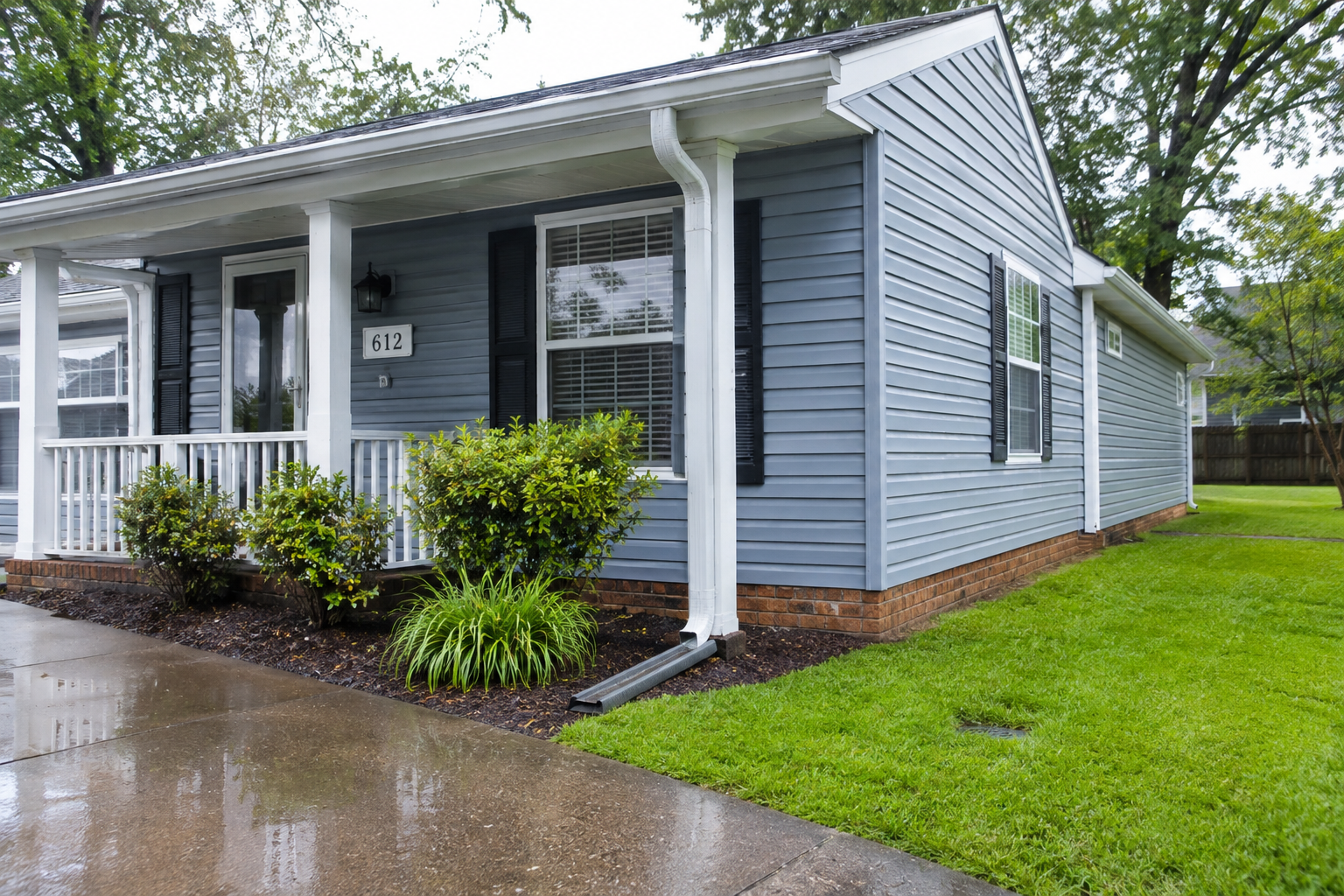
Compare the Entire Investment, Not Just the Rent
A common mistake is choosing a market because its median rent looks high. Investors should instead calculate the complete cost of ownership.
Consider the expected mortgage payment, taxes, landlord insurance, flood insurance when applicable, HOA or condo fees, maintenance, capital expenditures, vacancy, property management, leasing expenses, landscaping, pest control, utilities paid by the owner, and expected turnover costs.
The federal government's HUD FY 2026 Fair Market Rent schedule can provide another regional reference point. For FY 2026, the Virginia Beach-Norfolk-Newport News HUD Metro FMR Area includes the major Hampton Roads cities. HUD's Fair Market Rent figures should be treated as one reference source rather than a substitute for current property-specific rental comparables.
An inexpensive home is not automatically a better investment. A $280,000 property requiring significant renovation and ongoing repairs may produce a weaker return than a more expensive property with stronger rent performance and fewer expected capital expenses.
Understand Virginia Landlord Requirements Before Buying
Rental-property investing also requires understanding Virginia law. The Virginia Residential Landlord and Tenant Act addresses rental agreements, security deposits, maintenance obligations, disclosures, landlord access, tenant remedies, landlord remedies, notices, and other aspects of residential rental ownership.
Investors should review current requirements rather than rely on an old lease or information written for another state. Local rules may also matter. Rental inspections, zoning requirements, short-term rental regulations, HOA restrictions, occupancy rules, and property-use restrictions can vary by locality or property.
For landlords with multiple properties, investors living outside Hampton Roads, or owners who do not want to handle leasing and maintenance directly, professional property management should also be included when calculating the expected cost of ownership.
Which Coastal Virginia Area Is Best for Your Investment Strategy?
The answer depends on what the investor wants the property to accomplish.
Virginia Beach may appeal to investors who want exposure to a large, established housing market and are comfortable with higher acquisition costs.
Norfolk may be attractive for investors seeking diversified rental demand and a wide variety of property types.
Chesapeake may work well for investors targeting single-family properties and stronger monthly rent levels, provided the purchase price supports the numbers.
Hampton and Newport News offer more moderate citywide acquisition prices and access to the Peninsula's employment base.
Portsmouth may appeal to investors prioritizing lower acquisition costs or value-add opportunities.
Suffolk can be worth considering for investors focused on suburban and larger single-family rental properties.
None of these markets should be treated as automatically better than the others. A properly purchased and maintained rental in Hampton can outperform a poorly purchased property in Virginia Beach. A carefully selected Portsmouth property can outperform a higher-priced Chesapeake rental. The individual property's numbers matter more than the city's reputation.
Final Takeaway
Coastal Virginia provides rental property investors with a wide range of opportunities because the region combines military, maritime, shipbuilding, healthcare, higher education, aerospace, tourism, logistics, government, and private-sector employment.
In 2026, Virginia Beach, Norfolk, Chesapeake, Hampton, Newport News, Portsmouth, and Suffolk each present different strengths. Virginia Beach offers scale and broad housing demand but generally requires a higher purchase price. Norfolk provides one of the region's most diverse rental environments. Chesapeake and Suffolk offer opportunities for investors interested in single-family rentals. Hampton and Newport News provide Peninsula options at more moderate entry prices, while Portsmouth can offer lower acquisition costs and potential value-add opportunities. The best investment decision should ultimately happen at the property level.
Before purchasing, compare nearby rental listings, study recent market activity, inspect the property carefully, obtain real insurance quotes, investigate flood exposure, calculate realistic repairs and capital expenditures, review zoning and HOA restrictions, and understand Virginia landlord requirements.
The goal is not simply to buy property in the city with the highest rent or lowest purchase price. The goal is to find a Coastal Virginia rental where location, acquisition cost, realistic income, operating expenses, property condition, and long-term strategy combine to create a sustainable investment.
This version is finalized for 2026 publication and keeps the city-level figures explicitly labeled as September 2026 market data, which is important because they will continue changing over time. The flood section is also appropriately cautious: FEMA states that flood maps are the official NFIP mapping source, while Virginia emergency officials specifically direct Coastal Virginia residents to evaluate flood risk rather than assuming low-risk areas have no exposure. msc.fema.gov