
.png)
Key Takeaways
Landlords in Virginia must follow specific application and screening laws including limits on application fees and consent requirements for background checks.
A comprehensive Virginia rental application typically includes personal details, rental and employment history, income verification, credit checks, and references.
Written consent is legally required before conducting credit or criminal background checks under federal and state laws.
Fair Housing rules in Virginia prohibit discrimination and require objective screening criteria for all applicants.
Proper documentation and transparent communication throughout the application process can protect landlords from disputes and legal risks.
In 2026, Virginia’s rental market continues to be competitive, with landlords striving to attract reliable tenants while complying with evolving housing laws. A robust rental application checklist helps landlords screen prospective tenants effectively and fairly. Whether you manage a single-family home or a multifamily building, understanding what to collect and evaluate in a rental application ensures you find quality tenants and remain compliant with state and federal regulations. This guide dives into the specific information landlords look for, the legal framework governing rental applications in Virginia, and practical steps for creating a professional and compliant screening process.
Why a Rental Application Checklist Matters

A rental application is more than a form tenants fill out. It is a legal and business tool landlords use to make informed decisions about who will live in their property. A well-structured application helps landlords:
Assess financial stability and rental history
Reduce risks of late payments and property damage
Ensure compliance with Fair Housing and landlord-tenant laws
Create a record of the screening process for future reference
Virginia law has specific rules governing rental applications, fees, and tenant screening to protect both landlords and tenants. Understanding these is essential for anyone leasing property in the state.
Legal Framework for Rental Applications in Virginia
Virginia Law on Application Fees
In Virginia, landlords may charge an application fee, but it cannot exceed $50, not including actual out-of-pocket expenses for third-party screening services. Any additional application deposit must be handled separately and, if the applicant is not selected, refunded within the timeframes specified by law.
Official statute sections such as § 55.1-1203(C) and § 55.1-1226(A) cover application and deposit regulations.
Fair Housing and Anti-Discrimination Laws
Landlords in Virginia must comply with the Federal Fair Housing Act, which prohibits discrimination based on characteristics like race, color, sex, national origin, religion, familial status, and disability. Virginia also expands protections to include source of income and sexual orientation or gender identity in some contexts.
As a result, any checklist items or screening criteria must be applied uniformly to all applicants.
Consent for Background and Credit Checks
Landlords must obtain written consent from applicants before running credit, criminal, or other background checks. This is governed by the Fair Credit Reporting Act (FCRA) and supported by Virginia screening practices. If an application is denied due to information in a credit report, an adverse action notice must be provided, including the credit agency’s contact information and dispute rights.
Statement of Tenant Rights and Responsibilities
Virginia requires landlords to provide a Statement of Tenant Rights and Responsibilities with leases. While this is most relevant after the application phase, it influences how applications and tenant interactions unfold, fostering transparency and informed consent.
Rental Application Checklist: What to Include
The following sections outline the essential components landlords should include in a Virginia rental application form.
1. Applicant Personal Information
Collect basic contact and identification details:
Full legal name
Current address
Phone number and email
Date of birth or age (optional but useful for screening)
Government issued ID number (e.g., driver’s license)
This information forms the foundation of the application and allows landlords to perform necessary screenings.
2. Rental History
Documenting previous rental behavior is one of the most reliable indicators of future performance.
Include:
Addresses of current and previous rentals
Names and contact information for past landlords
Dates of residency
Reason for leaving
Rent payment history
Talking to former landlords or verifying rental history helps confirm the applicant’s on-time payments and compliance with lease terms.
3. Employment and Income Verification
Assessing financial stability ensures the applicant can afford rent.
Required documentation might include:
Employer name and contact
Job title and length of employment
Recent pay stubs or tax returns
Proof of other income sources
Most landlords set a minimum income requirement, such as a multiple of monthly rent, to reduce the risk of missed payments.
4. Credit Check Authorization
A credit report provides a snapshot of an applicant’s financial management. It highlights payment history, debt levels, and credit score trends.
Important:
Collect written authorization before pulling credit reports.
Credit results can influence approval but must not be the sole criterion for rejection without considering context.
FCRA compliance is essential to avoid legal issues.
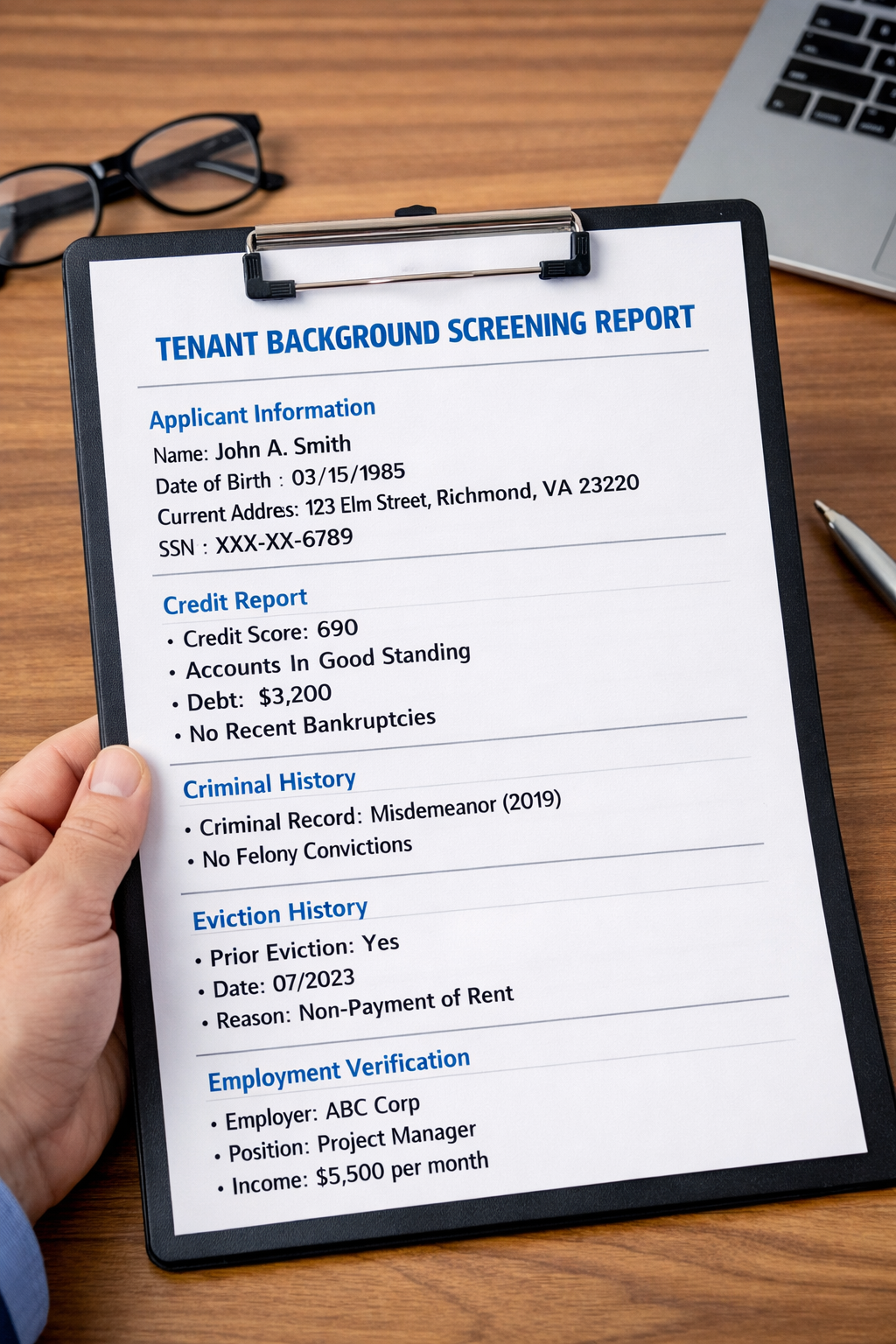
5. Criminal Background and Eviction History
Criminal background checks are allowed, but landlords must use consistent, non-discriminatory policies. Blanket bans based on criminal history can violate Fair Housing rules if they disproportionately impact protected classes.
Records of evictions or prior leasing disputes are highly relevant since they directly reflect rental behavior.
 6. References
Personal and professional references help corroborate the information provided by the applicant.
Suggested references:
Past landlords
Supervisors or employers
Personal character references
Speaking directly with references often yields insights not evident in paperwork alone.
7. Pets and Additional Occupants
Application sections should document:
Pet type, size, and breed
Whether animals are service or emotional support animals
Names and ages of all occupants
This helps landlords anticipate wear and tear, understand liability issues, and confirm compliance with local ordinances.
8. Consent and Legal Disclosures
Be sure the application includes clear consent language for:
Credit checks
Background checks
Verification of provided information
Include language informing applicants that falsification of information may lead to denial.
Screening Best Practices for Virginia Landlords
Treat All Applicants Equally
Maintain objective standards and document decisions consistently. Avoid subjective criteria that could invite discrimination claims. Fair and uniform practices help protect your business.
Avoid Discriminatory Language
Do not ask about protected characteristics like race, religion, disability, or marital status in your application form. These can violate both federal and state laws.
Use Professional Tenant Screening Tools
Partnering with reputable tenant screening services ensures you gather accurate credit, criminal, and eviction histories. These services help landlords comply with legal requirements and improve decision-making.
Document Everything
Keep copies of all applications, screening results, consent forms, and communication for at least three years. This documentation can protect you in the event of disputes or legal challenges.
Common Mistakes to Avoid
Charging illegal or excessive application fees
Running background or credit checks without written consent
Using inconsistent screening criteria
Asking prohibited questions or using discriminatory language
Being proactive about compliance minimizes risk and fosters trust with applicants.
Final Thoughts
Preparing a thorough rental application checklist is crucial for landlords in Virginia in 2026. Not only does it help you assess each applicant comprehensively and fairly, it also keeps you within the bounds of state and federal laws. From collecting personal details and verifying income to conducting credit and background checks with written consent, every step should be deliberate and well documented.
By following this updated guide and consulting reputable resources, you can attract dependable tenants and safeguard your rental business against legal risks. Whether you manage one property or a portfolio, a well-built rental application process is key to long-term success.
For more details on Virginia landlord and tenant resources, visit the Virginia Department of Housing and Community Development site.