
Key Takeaways
Virginia does not have statewide rent control, meaning landlords can raise rent by any amount as long as legal procedures are followed.
Rent increases typically occur at the end of a lease term, unless the lease agreement specifically allows changes earlier.
Written notice is required, generally at least 30 days in advance for most tenancies.
Landlords with more than four rental units must provide 60 days’ notice before a lease renewal rent increase.
Rent increases cannot be discriminatory or retaliatory, and they must comply with federal and state housing laws.
Virginia’s rental market remains one of the most flexible in the United States when it comes to rent adjustments. In 2026, landlords across the Commonwealth still have significant freedom to adjust rental pricing based on market demand, inflation, property improvements, or rising operational costs. However, this flexibility does not mean landlords can raise rent however they want.
Rent increases must follow the rules set by the Virginia Residential Landlord and Tenant Act (VRLTA) and other housing laws. These regulations outline when rent can be increased, how much notice must be given, and what practices are prohibited. Ignoring these requirements can lead to disputes, delayed rent increases, or legal issues.
This guide explains how to increase rent legally in Virginia in 2026, including notice requirements, timing rules, tenant protections, and best practices for landlords who want to remain compliant while protecting their investment.
Understanding Rent Increase Laws in Virginia
Virginia Follows a Market-Based Rent System
Unlike some states that limit rent increases, Virginia operates under a market-based system. This means landlords can set rental prices based on supply, demand, property value, and market conditions.
Virginia law currently prohibits statewide and local rent control policies, so cities and counties cannot impose rent caps or limit rent increases. This gives property owners more flexibility when adjusting rental rates.
More information about Virginia landlord-tenant laws can be found in the official handbook published by the Virginia Department of Housing and Community Development:
https://www.dhcd.virginia.gov/sites/default/files/Docx/landlord-tenant/landlord-tenant-handbook-final.pdf
Because there are no rent caps, landlords often adjust rent annually to reflect:
Rising maintenance costs
Property upgrades
Inflation
Local housing demand
Comparable rental prices in the area
However, legal procedures must still be followed for any increase to be valid.
When Landlords Can Increase Rent in Virginia
End of Lease Term
In most cases, landlords can increase rent only when a lease term ends.
For example:
A 12-month lease typically allows a rent adjustment when the lease expires.
A 6-month lease can be adjusted at the renewal period.
Month-to-month agreements allow more frequent changes but still require proper notice.
The VRLTA governs these agreements and establishes the framework for landlord and tenant responsibilities. You can read the statute here:
https://law.lis.virginia.gov/vacode/title55.1/chapter12/
Attempting to increase rent during a fixed-term lease without permission in the lease agreement could violate the contract.

How Much Can Rent Increase in Virginia
No Legal Cap on Rent Increases
One of the most notable aspects of Virginia rental law is that there is no statutory limit on rent increases.
This means landlords may raise rent to any amount they believe reflects the property’s market value.
However, the increase must still meet several legal requirements:
Proper written notice must be provided
The increase cannot violate the lease agreement
The increase cannot be discriminatory or retaliatory
The increase must comply with federal housing laws
Because of this flexibility, landlords typically rely on local rental market data to determine appropriate increases.
For example, in many Northern Virginia markets, annual rent increases often fall within the range of 3% to 8%, depending on demand and property condition.
Photo: Northern Virginia residential neighborhood
Required Notice for Rent Increases
Standard Notice Requirements
Most rent increases in Virginia require at least 30 days written notice before the new rent takes effect.
This applies to:
Month-to-month leases
Lease renewals
Rental agreements with automatic renewal provisions
The notice should include:
The current rent amount
The new rent amount
The date the increase begins
Instructions for lease renewal or termination
Written documentation is essential. Verbal notice alone is generally not sufficient if a dispute arises.
60-Day Notice Rule for Larger Landlords
Virginia law includes additional requirements for certain property owners.
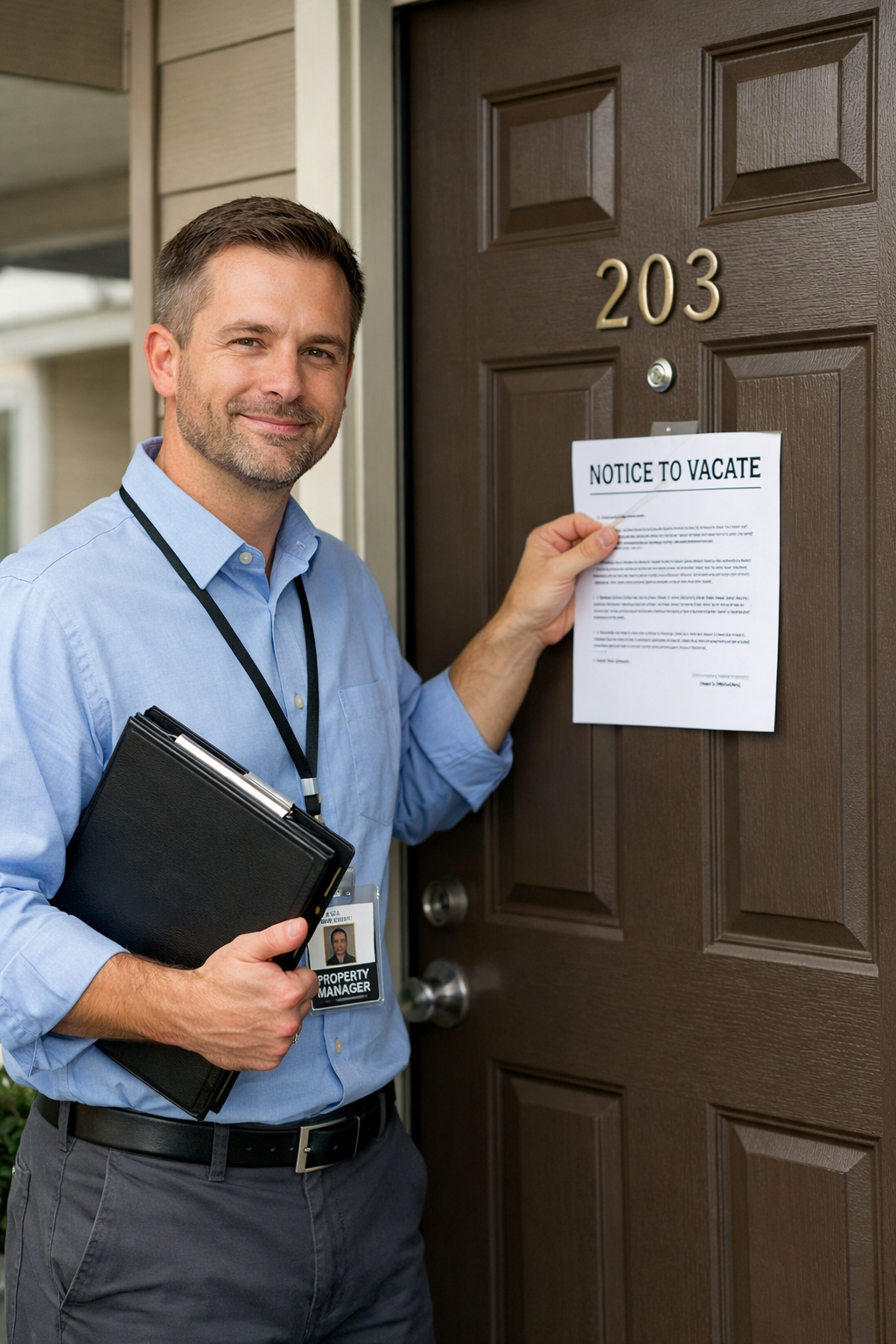
Landlords who own more than four rental units or have a financial interest in more than four units must provide at least 60 days’ notice before the lease ends if they plan to increase rent for the next term.
This rule gives tenants additional time to decide whether they want to:
Renew the lease at the higher rate
Negotiate terms
Move to another property
You can review the relevant legal provisions in Virginia Code §55.1-1204 here:
https://law.lis.virginia.gov/vacode/55.1-1204/
Month-to-Month Rental Increase Rules
Month-to-month leases are more flexible than fixed-term agreements.
Landlords can raise rent on these tenancies with 30 days written notice before the next rental period begins.
For example:
Notice delivered on April 1
New rent becomes effective May 1
If a landlord fails to provide proper notice, the tenant may legally continue paying the previous rent until the required notice period has passed.
Situations Where Rent Cannot Be Increased
Even though Virginia allows flexible rent adjustments, certain increases are illegal under federal or state law.
Discriminatory Rent Increases
The federal Fair Housing Act prohibits discrimination based on protected characteristics such as:
Race
Religion
National origin
Sex
Disability
Familial status
Landlords cannot raise rent selectively to target protected groups.
The U.S. Department of Housing and Urban Development provides an overview of fair housing protections here:
https://www.hud.gov/program_offices/fair_housing_equal_opp/fair_housing_act_overview
Retaliatory Rent Increases
Virginia law also prohibits retaliatory rent increases.
A landlord cannot raise rent in response to a tenant:
Reporting code violations
Requesting repairs
Filing a complaint with housing authorities
Exercising legal tenant rights
Retaliation can lead to legal challenges and penalties.
Local Considerations Across Virginia
Although rent control is prohibited statewide, local market conditions still influence pricing decisions.
High-demand regions often experience more frequent or larger rent adjustments.
Common areas with strong rental demand include:
Northern Virginia (Arlington, Fairfax, Alexandria)
Richmond metropolitan area
Virginia Beach and Hampton Roads
College towns like Charlottesville
Landlords should evaluate:
Comparable rental listings
Vacancy rates
Local employment trends
Housing supply
Rental market data is widely available through the U.S. Census Bureau and housing research organizations:
https://www.census.gov/housing
Best Practices for Raising Rent Without Losing Tenants
A legal rent increase does not automatically mean tenants will accept it. Many landlords focus on communication and transparency to maintain strong tenant relationships.
Provide Early Notice
Even though the law may require only 30 days, many property managers provide 45 to 60 days of notice. This approach helps tenants plan ahead and reduces conflict.
Explain the Reason for the Increase
Tenants are more likely to accept rent adjustments if they understand the reason.
Common explanations include:
Rising property taxes
Maintenance costs
Market rate adjustments
Property improvements
Improve the Property
Small upgrades can help justify a rent increase:
Fresh paint
Updated lighting
New appliances
Improved landscaping
Mistakes Landlords Should Avoid
Rent increases can cause disputes if handled improperly.
Increasing Rent Mid-Lease
Unless specifically allowed in the lease agreement, landlords cannot raise rent during a fixed-term lease.
Failing to Provide Written Notice
A rent increase may be unenforceable if proper written notice is not delivered.
Ignoring Fair Housing Rules
Any rent change that appears discriminatory or retaliatory can lead to serious legal consequences.
Setting Unrealistic Rent Prices
Even though there is no legal cap, an excessively high rent increase could cause tenants to leave, resulting in vacancy losses and turnover costs.
Tenant Rights During Rent Increases
Tenants in Virginia have several protections when facing a rent increase.
These include:
Receiving proper written notice
Being protected from discriminatory increases
Having the option to decline a lease renewal
Accessing legal assistance if disputes occur
Tenants can learn more about their rights through Virginia Legal Aid:
https://www.valegalaid.org
The Virginia Judicial System also provides housing forms and information here:
https://www.vacourts.gov
Final Thoughts
Increasing rent legally in Virginia in 2026 is relatively straightforward compared to states with strict rent control policies. The Commonwealth allows landlords significant flexibility to adjust rents based on market conditions. However, this freedom comes with responsibilities.
To increase rent legally, landlords must:
Follow the Virginia Residential Landlord and Tenant Act
Provide proper written notice
Avoid discriminatory or retaliatory practices
Respect the terms of the lease agreement
Landlords who follow these guidelines can adjust rental rates confidently while maintaining compliance with state law.
By combining legal compliance, clear communication, and market research, property owners can implement rent increases smoothly while maintaining positive relationships with tenants and protecting long-term investment returns.